Showing posts with label Tecnology. Show all posts

Monday, September 1, 2014

What 13 successful people do before going to bed

Morning routines are important — but bedtime rituals can have a serious impact on your success. 
That’s because the very last thing you do before bed affects your mood and energy level the following day, since it often determines how well and how much you sleep.
Knowing that, we decided to find out how the most successful spend their nights before surrendering to sleep.
Turns out some — like President Obama and writer Michael Lewis — are night owls, preferring to work while the rest of the world sleeps; while others —like Arianna Huffington and Sheryl Sandberg — know how important sleep is, and force themselves to cool down.
President Barack Obama is a "night owl" and likes to work late.
REUTERS/Kevin LamarqueREUTERS/Kevin Lamarque

Unlike Obama's predecessor George W. Bush, who prefers to rise in the early hours, the current president stays up late, reports Carrie Budoff Brown at Politco. He is said to hold conference calls with senior staff as late as 11 p.m. and reads or writes before heading to bed.
In a 2011 interview with Newsweek, Obama calls himself a "night owl" and describes his typical evening:
"Have dinner with the family, hang out with the kids, and put them to bed about 8:30 p.m. And then I'll probably read briefing papers or do paperwork or write stuff until about 11:30 p.m., and then I usually have about a half hour to read before I go to bed ... about midnight, 12:30 a.m. — sometimes a little later."
Obama has also said that if he's home late at night, he'll try to catch "The Daily Show." "I think Jon Stewart's brilliant," Obama tells Rolling Stone.
Inventor Benjamin Franklin asked himself the same self-improvement question every night.
AP Photo/Pablo Martinez MonsivaisAP Photo/Pablo Martinez Monsivais

In his autobiography, Franklin outlined a schedule that would lead him to "moral perfection." In this ideal schedule, Franklin asked himself the same self-improvement question every night: "What good have I done today?"
He described his other rituals before bed as "put things in their places, supper, music or diversion or conversation, and examination of the day."
Franklin tracked his progress on self-improvement daily.
Facebook COO Sheryl Sandberg turns off her phone at night.
REUTERS/Rick WilkingREUTERS/Rick Wilking

Sandberg might work for a tech company, but she knows when to unplug.
Sandberg tells Jefferson Graham at USAToday that it's "painful," but she turns her phone off at night so that she "won't get woken up."
"I check my e-mail the first thing in the morning, and the last thing at night," says Sandberg.
Winston Churchill had an evening ritual that included a short nap, bath, and drinks well past midnight.
Getty ImagesGetty Images

The British prime minister kept to a similar daily routine no matter what happened. In the book "Daily Rituals: How Artists Work," author Mason Currey recorded Churchill's schedule:
Around 5 p.m., the prime minister would drink a weak whisky and soda before taking a nap for an hour and a half. Churchill said this siesta, or short nap, allowed him to work for 1.5 days every 24 hours. When he woke, he bathed and got ready for dinner.
At 8 p.m., Churchill would eat dinner, which was often followed by drinks and cigars well past midnight.
Due to his irregular sleep schedule, Churchill was said to hold War Cabinet meetings in his bath.
Stephen King's nightly routine includes washing his hands and making sure all the pillows face a certain way.
AP Photo/CBS, Brownie HarrisAP Photo/CBS, Brownie Harris

"It’s not any different than a bedtime routine," says King as recorded in Lisa Rogak's book "Haunted Heart: The Life and Times of Stephen King."
"I brush my teeth, I wash my hands. Why would anybody wash their hands before they go to bed? I don’t know. And the pillows are supposed to be pointed a certain way. The open side of the pillowcase is supposed to be pointed in toward the other side of the bed. I don’t know why."
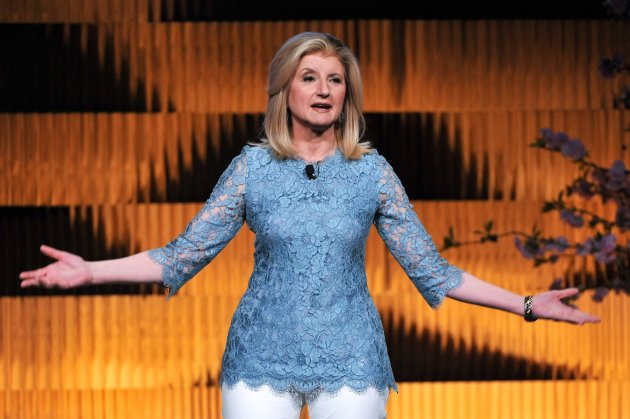
Arianna Huffington only reads "real books" before bed.
D Dipasupil/Getty ImagesD Dipasupil/Getty Images

Sleep advocate Huffington recommends banning iPads, Kindles, laptops, and any other electronics from the bedroom to unwind.
Instead, she likes to read the old-fashioned way, "real books."
Michael Lewis prefers to write between the hours of 7 p.m. and 4 a.m.
REUTERS/Lucas JacksonREUTERS/Lucas Jackson

Author Robert Boynton asked Lewis about his ideal writing routine, as recorded in the book "The New New Journalism":
"Left to my own devices, with no family, I'd start writing at 7 p.m. and stop at 4 a.m.," says Lewis. "That is the way I used to write. I liked to get ahead of everybody. I'd think to myself, 'I'm starting tomorrow's workday, tonight!' Late nights are wonderfully tranquil. No phone calls, no interruptions. I like the feeling of knowing that nobody is trying to reach me."
Former Googler Keval Desai works at night, so he can concentrate.
AdAge via YouTubeAdAge via YouTube

Desai, a former Google product director and current partner at InterWest Partners, says that staying up is a habit of his. Desai tells Lydia Dishman at Fast Company that he likes to pick one project per night and doesn't go to bed until the project is done.
"During the day most of my time is spent in meetings with entrepreneurs, and the only time I can find alone to do work that requires some concentration is when the rest of the household is asleep," he says.
Kate White, former Cosmo editor-in-chief, likes to write while standing up in the kitchen.
Getty Images/Jemal CountessGetty Images/Jemal Countess

As a magazine editor, White preferred to work on her fiction writing in the early morning hours and switch to magazine editing and blogging at night.
"My craziest trick is that I regularly do my work standing up at a rolling butcher block counter in my kitchen. If I were to work sitting down, I’d fall asleep," White told Dishman at Fast Company. "I know it sounds awful, but I think of it as if I’m tending bar in the evening — a bar of ideas. And I always keep the kitchen TV on so it doesn’t seem too lonely. I drink several espressos at night, which really helps."
Bill Gates reads for an hour before bed, no matter what time he gets home.
REUTERS/Rick WilkingREUTERS/Rick Wilking

The Microsoft billionaire told the Seattle Times: "I read an hour almost every night. It's part of falling asleep."
He enjoys "deeply informative and beautifully written" books (in June he released a list of six books he recommends) and his reading topics range from healthcare to climate change to business and politics.
Gates says he considers himself a very fast reader, despite never taking a speed-reading course.
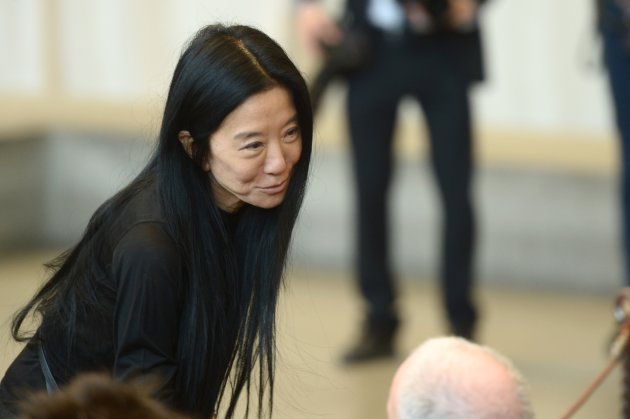
Vera Wang uses this "peaceful" time to look over materials her staffers send her.
Michael Loccisano/Getty ImagesMichael Loccisano/Getty Images

"My bedroom is my sanctuary," the fashion designer told Fortune in 2006. "It's like a refuge, and it's where I do a fair amount of designing — at least conceptually if not literally."
She said staffers send her stuff at home, "and I always read it at night — the only time when seven people aren't coming to me at once," Fortune reported.
Buffer CEO Joel Gascoigne walks every evening right before bed.
BufferBuffer

Gascoigne takes a 20-minute walk every evening to allow total disengagement from his work before turning off the lights.
"This is a wind down period, and allows me to evaluate the day’s work, think about the greater challenges, gradually stop thinking about work, and reach a state of tiredness," he writes in a blog post.
Kenneth Chenault, CEO of American Express, writes down three things he wants to accomplish the next day.
Brian Ach /AP Images for American ExpressBrian Ach /AP Images for American Express
Before retiring for the night, Chenault says he likes to write down the top three things he wants to accomplish the next day. This helps him prioritize first thing the next mornin

Friday, July 11, 2014

Dubai’s Damac offers free BMW with each purchase during Ramadan

Dubai developer Damac Properties has announced it will give away a luxury BMW luxury car with each unit purchased during Ramadan as part of its special promotion during the holy month.
Customers signing on the dotted line for a property will be presented with a luxury car, including the BMW 520i and the BMW 320i and the promotion extends outside the UAE to buyers from Saudi Arabia, Qatar and Kuwait, who will be able to take collection of the vehicles in their home country.
"Damac Properties has always been known for leading the market with attractive offers on luxury projects at key times of the year," said Ziad El Chaar, Managing Director, Damac Properties. "Overseas investors in particular are always looking for that something extra to catch their attention; something special, when investing in Dubai real estate."
The promotion will be offered for until July 31, 2014.The promotion will be offered for until July 31, 2014.The promotion will be offered for units in projects in the Burj Area, Dubai Marina, Jumeirah Village, and the 42 million sq ft master development, AKOYA by Damac until July 31, 2014.
Earlier this year, Emaar chairman Mohamed Alabbar hit out at developers who offer free cars with apartment purchases, saying it is "unethical" and that the Dubai government should look into the practice.
In an interview published in Arabian Business, the Emaar chairman, who did not name any specific developers or offers, said: "I guess I want the customer, especially those overseas, to be careful who they deal with. I worry about these investors from abroad who buy an apartment and they promise them a plane or a car or whatever. In my opinion this is just so unethical... I do proper business every day, I think what others do, it's a matter for the government to look into.

Saturday, June 28, 2014

YouTube Embraces Crowdfunding


Fans can now contribute money directly to their favorite channels on YouTube, bringing crowdfunding to the world's largest video site. YouTube CEO Susan Wojcicki unveiled the feature, one of several new products, during her keynote presentation at VidCon, an annual convention for the online video industry.
Many YouTube channels and stars already use crowdfunding sites such as Kickstarter and Indiegogo to raise funds. Freddie Wong has raised hundreds of thousands of dollars for every season of “Video Game High School” while Rooster Teeth has raised more than $1.7 million thus far in a campaign that has ten days left.

Also read: The Key to Rooster Teeth's Million-Dollar Crowdfunding Campaign: ‘The Economy of First’
YouTube is not trying to steal business from Kickstarter or Indiegogo, the two largest crowdfunding platforms. It released a new interactive card that will link to a campaign on other sites. YouTube's new feature also limits fans’ contributions to $500.
Yet it wants to enable creators big and small to get some help from their fans.
“Any viewer can show any creator their love by tipping them $1, $5, even as much as $500,” Wojcicki said.

Also read: Wil Wheaton's ‘Tabletop’ Sets Crowdfunding Record With $1.4 Million Haul
The fan-funding initiative was one of several tweaks to YouTube unveiled Thursday. People can now credit everyone they worked with on a video, and find free music from an audio library loaded with sound effects. Smaller businesses have already popped up to offer similar services to creators, but YouTube decided to offer the abilities on its own.
Wojcicki cited three primary objectives for YouTube in the year ahead: engaging a global audience, generating more revenue and strengthening music as YouTube moves towards offering a subscription service.

Also read: NeonGrid Is Building IMDb for YouTube Stars
These goals explain a few new initiatives:
>> Fans can now subtitle videos in other languages, a nod to the increasingly global audience on YouTube. YouTube's audience is bigger outside the United States than within it.
“Even though 60 percent of your views on average come from outside your home country, not all of YouTube's users can understand your videos,” Wojcicki said.

Also read: YouTube Feeding Frenzy Continues: Food Network Tastemade Raises $25 Million
>> YouTube's campaign to promote its stars with advertisements in major cities will continue by supporting Vice. Wojcicki said the campaign doubled awareness of Michelle Phan, tripled Bethany Mota and quadrupled awareness of Rosanna Pansino.
“It will help advertisers get even more comfortable with YouTube, meaning more ad dollars spent on YouTube, giving all of you even more room to grow your fan bases and businesses,” Wojcicki said.

>> YouTube and SiriusXM are collaborating on a new music countdown show called YouTube 15.

Friday, June 6, 2014

Facebook's new feature has users thoroughly creeped out


.
Facebook recently rolled out a new feature that's leaving some users speechless and others running to sign a petition to have it removed, news.com.au reports.
When enabled by users, the social network's new quirk allows its mobile app to turn on your smartphone's microphone, listen in on what's around you. Facebook identifies the music or TV shows it hears, and can tell the world you're currently "Listening to Iggy Azalea" if it hears you bumping "Fancy."
The opt-in feature has many users creeped out. More than half a million have flocked to sign a sumofus.com petition to have the new gimmick axed from the app.
" Tell Facebook not to release its creepy and dangerous new app feature that listens to users’ surroundings and conversations," the petition urges. " Facebook says it'll be responsible with this feature, but we know we can't trust it."
At a time when privacy concerns run rampant Facebook's new feature seems to go against the trend. In May Microsoft announced you'll be able to buy an Xbox One without the similarly creepy always-on Kinect watching and listening to your every move.
The sumofus.com petition is a little less than 200,000 signatures away from its goal: 750,000. Perhaps if it reaches that mark Facebook will actually listen to its users.

Saturday, April 12, 2014

Windows XP to retire after 12 years

Windows XP to retire after 12 years

  • Windows XP to retire after 12 years
Windows XP is no more. That's right, despite 27 per cent of you still using it Microsoft is waving farewell to its 12-year old OS in favour of Windows 8.

Latest News World of Warcraft expansion enters Alpha testing Apple patents smart headphones Samsung Galaxy S5 Zoom image leaked Nest Protect sales suspended over safety fears Sony to test 4K at the 2014 World Cup After April 8th 2014, Microsoft will stop all technical support for Windows XP users, including security updates and support information. Microsoft Security Essentials will also no longer be available to download.

In a bid to push users onto Windows 8.1, the 12-year old Windows XP has reached its end-of-life, despite 27 per cent of all users still having XP on their computers Although only a fraction of Windows users are on XP, more than a quarter of infections are XP-based. Microsoft has estimated that after April 8th, infections for XP will rise 66 per cent.

Microsoft was warned that after April 8th "your computer will still work but it might become more vulnerable to security risks and viruses." However, the UK government has paid Microsoft £5.5million to continue updates for a year for UK public sector. These updates will be available for one year and will allow public sector organisations to download security updates for Windows XP, Office 2003 and Exchange 2003. Google Chrome has also said that it will continue support for Windows XP users until April 2015, saying Chrome on XP will be automatically updated with security fixes to help protect for security.

Wednesday, April 2, 2014

iPhone 6 release date, features and spec rumours – all we know so far

Is this Apple's new iPhone 6 'Air Phablet'? Mocked-up features and specs show super thin handset

Apple could start manufacturing displays for the ‘big screen’ iPhone 6 as early as next month, supply chain sources have revealed.
The exact release date is unclear, however speculation is that it will be available to buy in the UK in September 2014.

Rumours surrounding the tech giant’s next generation smartphone claim the new iPhone will come in two screen sizes - both of which will be bigger than the iPhone 5s.

Aswell as a bigger 'Phablet-style' panel,new technology will give the iPhone 6 a much thinner 'Air' handset.

Suppliers Japan Display Inc, South Korea’s LG Display Co Ltd and Sharp Corp have all been approached to make the new screen, according to reports.

While Apple always official information tightly guarded until just before launch, it is thought first iPhone 6 models will feature a 4.7-inch screen for their autumn release.

A later version will have a 5.5-inch screen - considerably larger than that of the latest iPhone, which measures just under 4 inches.

The larger screens would mark a move by Apple to match tech rivals like Samsung and HTC.
Unofficial concept designs show what the bigger iPhone 6 could look like. (IB Times)


Both the new iPhone models are expected to include in-cell touch panel technology, allowing for a thinner handset.

However, difficulties with the technology in larger displays prompted a decision to delay production of the 5.5-inch versions, the sources said.
[Five essential apps for your Android smartphone][The best iPhone picture ever? Frequent flyer takes stunning Chicago skyline cloud shot]

Japan Display will reportedly be the first supplier to start production at its plant at Mobara, east of Tokyo, as early as May.

 The others are due to begin output around June.

 Leaked images appeared to show the iPhone 6 in production. (IB Times)
 Rumours: This image is another concept of what the phone could look like - but nothing official has been revealed. …

Wednesday, March 19, 2014

Sony unveils virtual reality headset for PS4

SAN FRANCISCO (AP) — Sony is getting into the virtual reality business.
The Japanese electronics and gaming giant unveiled a prototype virtual reality headset to be used in conjunction with its PlayStation 4 video game console during a Tuesday talk at the Game Developers Conference.
.
Shuhei Yoshida, president of Sony Computer Entertainment Worldwide Studios, showed off the slick black-and-white headset at the annual gathering of game designers. He said Sony has been working on the technology for more than three years.
The adjustable device is codenamed Project Morpheus and features a head-mounted display with 1080p resolution and a 90-degree field of view. Sensors built into the headset can track a wearer's head movement in concert with a PS4 camera
.
"This prototype is by no means final," said Yoshida. "We will continue to work on this to improve it, but we believe it's a good representation of how PlayStation will deliver VR."
Anton Mikhailov, a senior software engineer working on Project Morpheus, said the current version of the technology must be attached to a PS4 console with a cord that's about 15 feet (4.5 meters) long, and users' virtual perspectives can be simultaneously broadcast on a television screen
.
"The experience can be shared, and that's only going to allow it to spread," said Mikhailov. "I think that's going to be the key. Once people see someone else interacting in VR, they're going to want to put it on and try it next
."
Mikhailov said users will be able to interact with the virtual world displayed on the headset with the gesture-detecting PlayStation Move controller, as well as the standard DualShock 4. He declined to specify when the headset would be released or how much it would cost.
Project Morpheus will be available for demonstration beginning Wednesday for conference attendees on the conference's expo floor with four games: diving cage simulator "The Deep," medieval combat game "The Castle," sci-fi dogfighter "EVE: Valkyrie" and a VR rendition of the stealthy action-adventure title "Thief."
While Sony Corp. has released other head-mounted display units, Project Morpheus marks the company's first foray into VR with PlayStation. Sony's headset is similar to the Oculus Rift, a VR device currently in development by the Irvine, California-based startup Oculus VR.
Both devices use head tracking to reduce queasiness when users peek around a virtual landscape, and they look more like ski googles than the bulky gaming helmets of the 1990s that usually left users with headaches.